Should this type of bleeding occur later in pregnancy the situation could rapidly. Its rare after 20 weeks of pregnancy.
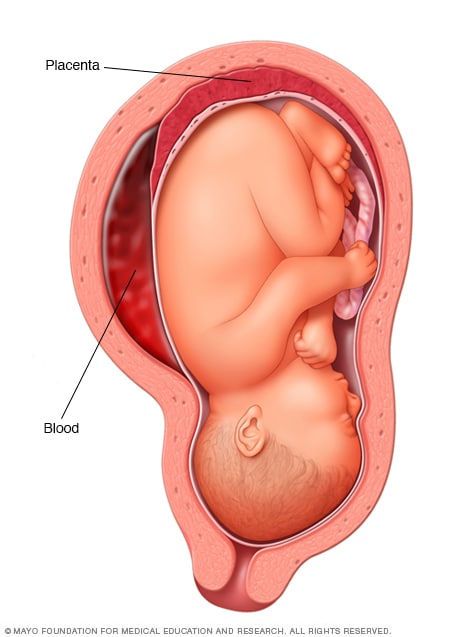
Placental Abruption Mayo Clinic
If the placenta begins to detach during.

What causes placenta abruption during pregnancy. Severe cases may require early delivery. Within the placenta are many blood vessels that allow the transfer of nutrients to the fetus from the mother. In most pregnancies the placenta is located at the top or side of the uterus.
A healthcare provider will diagnose and treat a placental abruption based on the severity of the separation and gestational age of the baby. Two conditions placenta previa the placenta covers the cervix and placenta abruption the placenta separates from the uterine wall. Of the abruption and how far along the pregnancy is.
One symptom of placental abruption is constant pain that causes your stomach to stay hard for an extended period of time without relief. The placenta which nourishes the baby can sometimes be problematic later in the pregnancy. Placental abruption is the premature separation of a placenta from its implantation in the uterus.
If complications occur during the pregnancy you may have a medical emergency such as placental abruption. Placental abruption is a condition that causes the placenta to detach from the uterus. In placenta previa the placenta is located low in the uterus.
Placental abruption is a condition during pregnancy when the placenta separates from the uterus. Gestational diabetes occurs when blood sugar levels are found to be too high during pregnancy. Its rare after 20 weeks of pregnancy.
Placenta previa can cause severe bleeding in the. Preeclampsia Preeclampsia is a quick or sudden onset of high blood pressure after the 20th week of pregnancy. Bleeding during pregnancy can be frightening but it doesnt always mean youre having a miscarriage.
When the placenta covers all or part of your cervix. Another sign is bloody fluid or premature breakage of your water. Symptoms can include bleeding and abdominal pain especially during the third trimester.
The placenta is a structure that develops in the uterus during pregnancy. Placental abruption is a life-threatening condition in which the placenta separates from your uterus before the baby is born. Preeclampsia usually occurs after the 34th week of gestation but it can develop after the infant is delivered.
This is where the placenta partially or completely separates from the wall of the uterus. 7 causes of vaginal bleeding during pregnancy. Preeclampsia is a condition of pregnancy characterized by high blood pressure hypertension and protein in the urine proteinuria.
This condition causes high blood pressure. Another cause of vaginal bleeding later in pregnancies is placental abruption. Can cause menstrual-like bleeding.
The placenta might partially or completely cover the cervix as shown here. A rare condition where the placenta detaches from the wall of your uterus. Preeclampsia and eclampsia develop most commonly during the first pregnancy.
Pregnant teens and women over 40 are at.

